Begin with the object’s intended future
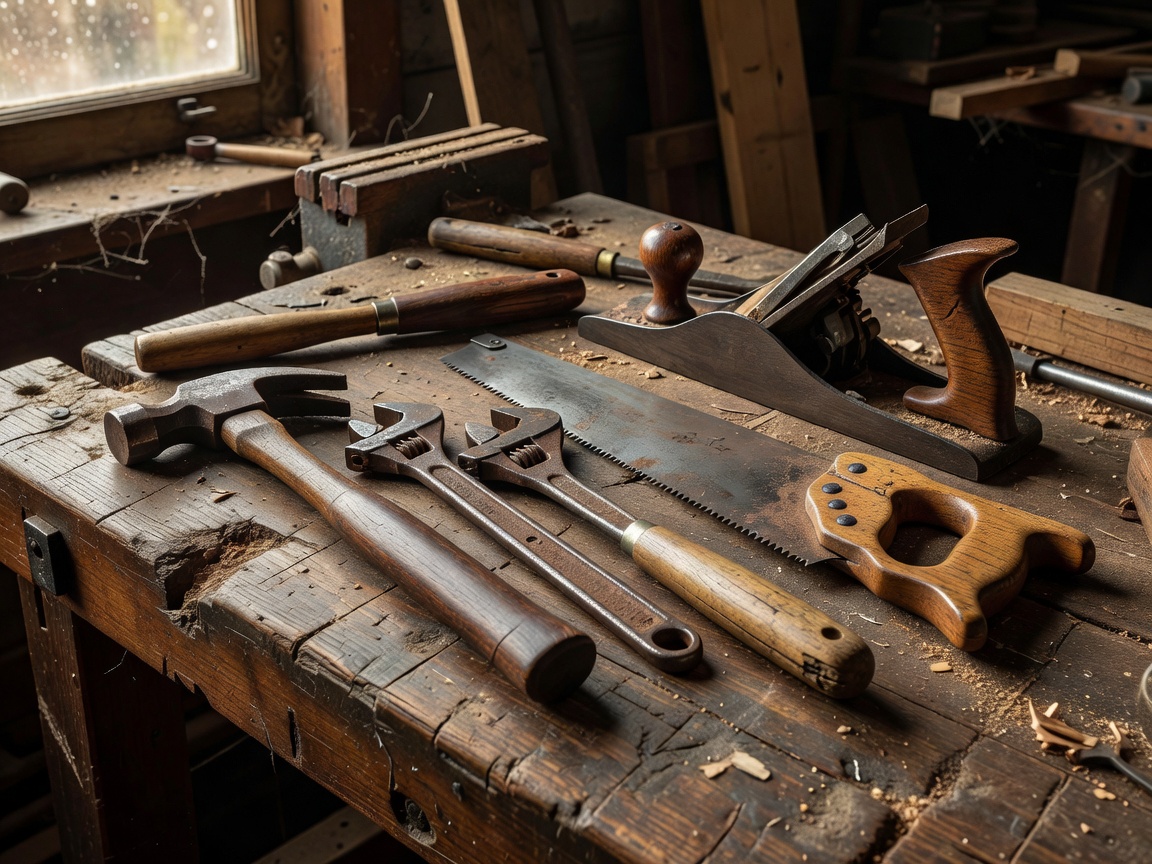
Will this object be displayed, handled occasionally or returned to regular use? Those are different projects. A vintage plane intended for woodworking needs an assessment of its working parts. A family keepsake may need only stable storage and a readable label. Neither approach should be chosen simply because a dramatic transformation looks satisfying on a screen.
Write down what you know about ownership, location and previous use. Keep boxes, instructions and detached fittings together. Photograph marks before removing deposits near them, and use a soft support so small parts cannot roll away. If you dismantle a suitable, non-hazardous object, record the sequence and label components without writing directly on historic surfaces.
Mixed materials make simple recipes unreliable
A small object may combine plated metal, timber, textile, paint, adhesive and a later protective coating. A treatment that seems harmless to one part can stain or swell another. Do not soak an assembled object merely because its most visible component is metal. Water can remain inside seams and handles, while a solvent can travel beyond the area where it was applied.
Check for loose layers before brushing. Enamel, japanned finishes and decorative transfers can resemble tough surfaces while having fragile edges. Painted lettering and paper labels deserve particular care. Maker names such as Stanley, Singer or Wedgwood can offer research leads, but a familiar name does not establish age, authenticity or treatment suitability on its own.
Metal: distinguish appearance from condition
Polishing removes material. On thin plating, repeated polishing can expose the base metal; on an engraved fitting, it can soften detail. Tarnish on silver and corrosion on iron are not interchangeable conditions. Nor does every darkened brass surface need to become bright. Some objects were deliberately finished to appear dark, and some carry a lacquer that changes the cleaning decision.
The question is not “Can this shine?” It is “What would shining it remove?”
Loose, powdery or recurring corrosion deserves informed assessment. Avoid general-purpose acid baths, improvised electrolysis and power-wire brushing as default advice. These methods introduce hazards and can remove original surfaces. If an object has monetary, cultural or strong personal significance, an objects conservator can help distinguish stable appearance from an active deterioration problem.
Ceramics and glass need more than a neat seam
A crack, a chip and a failing old repair are different conditions. Before handling, inspect the piece over a padded surface and support the base rather than a handle or rim. Do not test a suspect handle by lifting the whole object. Gather fragments without rubbing the broken edges together, and avoid adhesive tape directly on decoration.
A decorative repair does not establish food safety, heat resistance or dishwasher suitability. Visible ceramic mending inspired by kintsugi also needs accurate language: a modern adhesive-and-powder kit is not automatically equivalent to traditional urushi work. Traditional materials require specialist knowledge, and uncured urushi can cause severe skin reactions. Treat repaired vessels as display objects unless a qualified assessment supports another use.
Recognize objects that are not beginner projects
Old electrical appliances, clocks with unfamiliar mechanisms, pressure vessels and safety equipment need specialist examination. A newly polished casing does not make old wiring safe. Do not plug in a found lamp to see whether it works, or assume that replacing a cable alone addresses every electrical fault. Requirements vary by location and intended use.
Unknown luminous dials, laboratory equipment and containers with chemical residues also deserve caution. Do not scrape, open or clean a suspected hazardous object. Keep it out of routine handling and seek appropriate local advice. An object’s small size is no guide to the seriousness of its risks.
Before you clean a small find
- Identify all visible materials and fragile additions.
- Record marks and photograph existing damage.
- Choose display or use as the intended outcome.
- Check for electrical, chemical and coating hazards.
- Stop if a test changes colour, texture or adhesion.
Make storage part of the transformation
Once stable, an object benefits from a well-fitting support, clean surroundings and protection from knocks. Avoid crowded shelves and direct sunlight on vulnerable colours. Use suitable conservation-grade packing materials where appropriate, rather than assuming any soft foam or household tissue will remain harmless over time. Store the written record nearby, not glued to the object.
The Science Museum Group and the Smithsonian offer collection records that can help place ordinary things in context. The American Institute for Conservation provides routes to professional conservation advice. Research does not guarantee a precise identification, but it can replace an irreversible guess with a more useful question. Sometimes the finest small-object transformation is the moment an anonymous find acquires a carefully recorded history.